
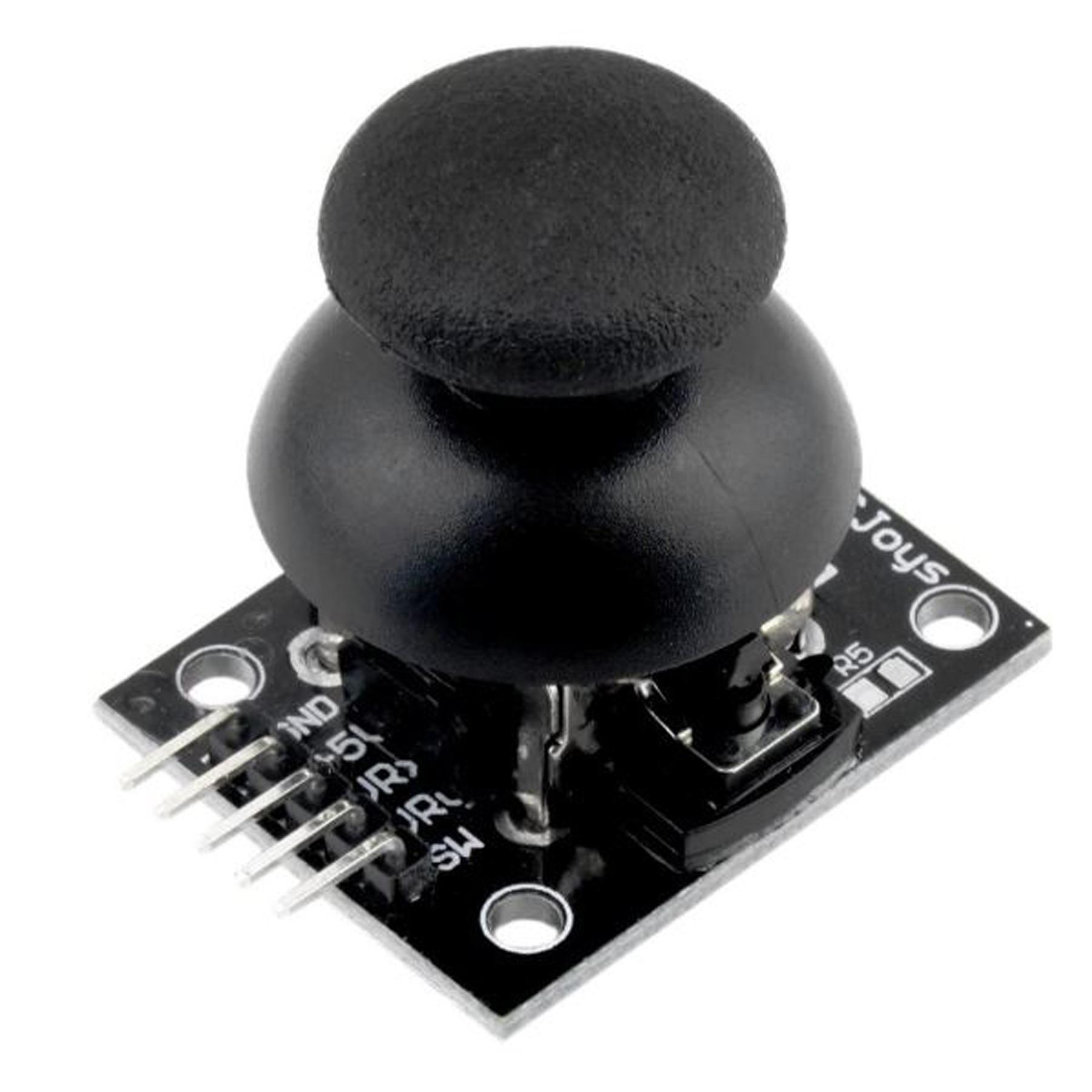
Joystick Module Specifications
General
- Type: 2-axis analog joystick with momentary push-button
- Axes: X-axis and Y-axis (potentiometer-based)
- Button: Digital switch when joystick is pressed downward
Electrical
- Operating Voltage: 5 V (typical)
- Output Type:
- X-axis: Analog voltage (0–5 V)
- Y-axis: Analog voltage (0–5 V)
- SW Output: Active-low digital signal
- Resting Position Output: ~2.5 V on both X and Y axes
- Potentiometer Values: ~10 kΩ each axis
- SW Pin Logic:
- Pressed: 0 V
- Released: 5 V
Mechanical
- Movement Range: ±30° (approximate)
- Center Return: Spring-loaded auto return to middle position
- Push-Button Travel: ~0.5–1 mm
Physical
- Typical Module Size: ~40 mm × 26 mm (varies by manufacturer)
- Mounting: 4 corner holes
- Pin Header: 5 pins (GND, +5V, VRx, VRy, SW)
Features
- Two-axis analog control suitable for directional input
- Built-in tactile push button
- Stable mid-point output for precision control
- Often used in robotics, RC controllers, menu navigation, and gaming interfaces





Reviews
There are no reviews yet.