
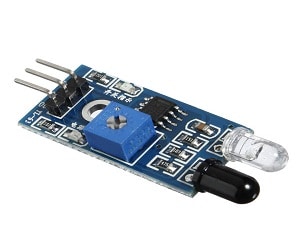
IR Obstacle Sensor Specifications
General
- Sensor Type: Infrared (IR) reflective obstacle detector
- Components: IR LED (transmitter) + Photodiode/Phototransistor (receiver)
- Output Type: Digital HIGH/LOW signal
- Detection Method: Reflected infrared light from nearby objects
Electrical
- Operating Voltage: 3.3 V – 5 V DC
- Current Consumption: ~10–20 mA (varies by module)
- Output Level:
- HIGH = No obstacle
- LOW = Obstacle detected (depends on module design)
Performance
- Detection Range: Typically 2 cm – 30 cm (adjustable)
- Sensitivity: Adjustable via onboard potentiometer
- Response Time: <1 ms
- Detection Angle: ~35°
Interface / Pins
- VCC – Power supply
- GND – Ground
- OUT – Digital output signal
Physical
- Module Dimensions: ~48 mm × 14 mm × 10 mm (varies by manufacturer)
- Mounting Holes: Usually 2 holes for easy installation
- Indicator LEDs:
- Power LED
- Output/Detection LED
Features
- Adjustable detection distance
- Stable digital output
- Works well for line-following robots, edge detection, and proximity sensing
- Simple 3-wire interface
- Low cost and widely available




Reviews
There are no reviews yet.