20ebe2f2-229b-45aa-a96b-a50e5c9d290f
Tilt Sensor Specifications
General
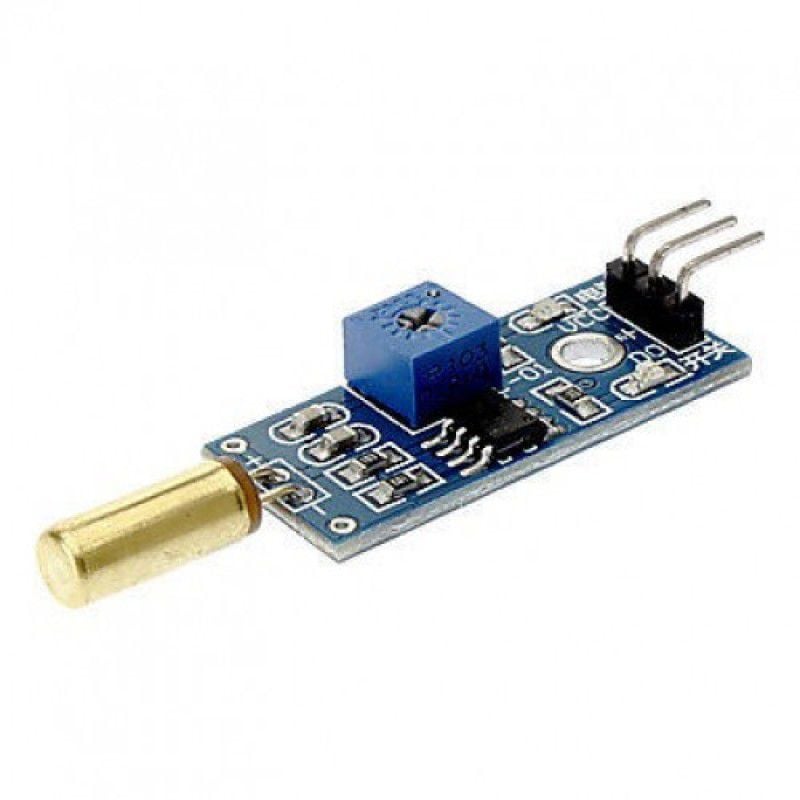
- Sensor Type: Mechanical ball‐type tilt switch
- Operating Principle: A metal ball inside the tube shifts position to open/close an electrical connection based on tilt angle
- Output Type: Digital ON/OFF (open/closed circuit)
- Application: Orientation detection, anti-tamper devices, motion triggers
Electrical
- Operating Voltage: Typically 3.3 V – 5 V (depends on module if used with board)
- Output Signal:
- LOW when tilted (ball closes circuit)
- HIGH or floating when upright (ball open circuit)
- Current Rating: Very low; only switching small currents (few mA)
Performance
- Tilt Angle Sensitivity: ~10° – 45° depending on sensor type
- Response Time: Instant mechanical switching
- Debounce: May produce noise; often requires software or hardware filtering
- Life Cycle: Mechanical parts wear over time
Physical
- Sensor Type: Cylindrical metal or glass enclosure
- Module Dimensions (if using a breakout): ~3 cm × 1.5 cm (varies by manufacturer)
- Weight: A few grams
Features
- Simple 2-pin device (NO/NC depending on orientation)
- No polarity — works in either direction of wiring
- Usually integrated on modules with:
- Pull-up resistor
- Indicator LED
- Digital output pin
- Compatible with Arduino, ESP8266, ESP32, Raspberry Pi, etc.
Applications
- Motion-activated devices
- Tilt detection in toys and robots
- Alarm/anti-tamper mechanisms
- Orientation sensing for small electronics





Reviews
There are no reviews yet.