









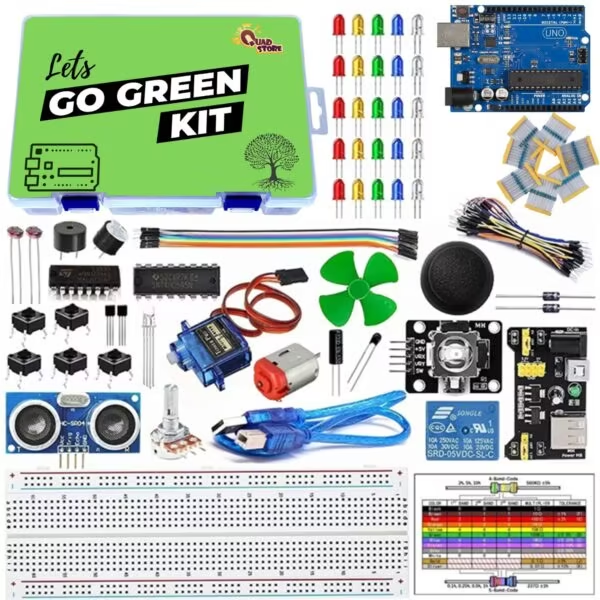
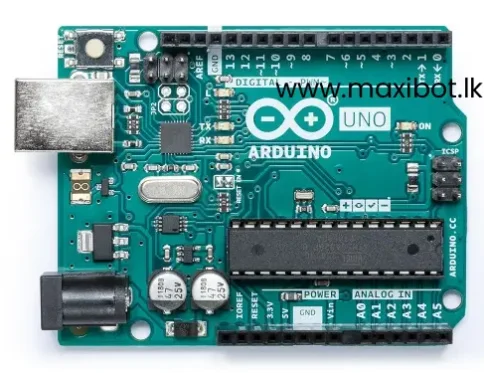
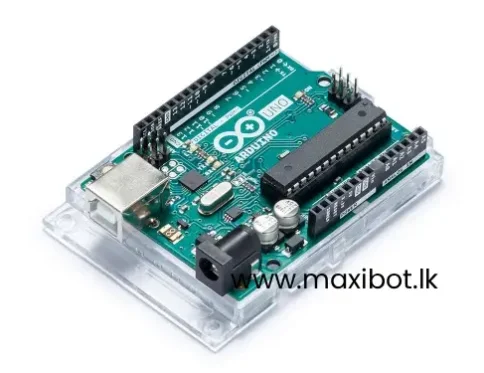
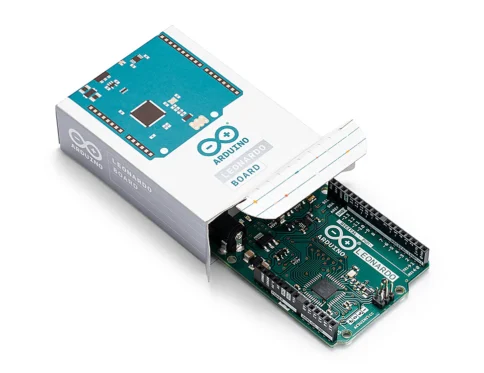
Arduino Uno R3 board: The microcontroller board that runs your code.
Breadboard: A solderless board for making temporary electrical connections.
Jumper wires: Wires used to connect components on the breadboard to the Arduino board.
Electronic components: A collection of common parts to build various projects, including:
-
- LEDs (Light Emitting Diodes)
- Resistors (various values)
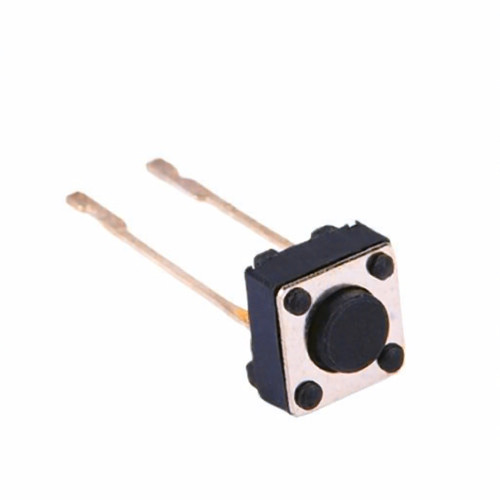
- Buttons or switches
Other potential inclusions: Some kits may also come with a USB cable for connecting to a computer and a set of instructions or a project book.
Microcontroller Details
Microcontroller: ATmega328P
Operating / Logic Voltage: 5 V
Input Voltage (recommended): 7–12 V
Input Voltage (absolute limit): 6–20 V
Digital I/O Pins: 14 (6 PWM capable)
Analog Input Pins: 6 (A0–A5)
DC Current per I/O Pin: 20 mA
Flash Memory: 32 KB (0.5 KB used by bootloader)
SRAM: 2 KB
EEPROM: 1 KB
Clock Speed: 16 MHz
Dimensions: ~68.6 mm × 53.4 mm
USB Interface: USB-B (type B connector)
Serial‑USB Chip: ATmega16U2 (used as USB‑to‑serial converter)
Current Consumption: ~50 mA typical
Compatibility Notes:
Fully compatible with Arduino IDE
Supports shields designed for Uno form factor
Can be powered via USB or VIN pin
Standard Uno R3 pinout widely supported
- Convenience: A starter kit provides all the necessary hardware in one package, saving the time and effort of buying each component individually.
- Hands-on learning: Kits are designed to be a practical way to learn, allowing you to build and experiment with projects right away.
- Good for beginners: The Arduino Uno is a very popular and well-supported board, making it an excellent starting point for those new to electronics.






Reviews
There are no reviews yet.